


Trauma Therapy
We provide specialist trauma counselling for adults 18+, with a special focus on women.

Some of the common symptoms include:
Anxiety
Panic Attacks
Overwhelm
Intrusive memories/Flashbacks
Easily triggered
Rigidness
Anger, shame & fear
Obsessive behaviour or thoughts
Addictions
Impulsivity
Auto Pilot
Unavailable/Shut down/Zoned out
Dissociation
Memory loss
Feeling disconnected from your body or from reality
Numb – separation from feelings and emotions
Chronic pain
Multi-Modality Approach
While talk therapy helps create awareness, I believe that interventions that go beyond awareness and understanding are necessary for deep and lasting change.
“You cannot talk therapy your way out of a nervous system response”


EMDR
(Eye Movement Desensitisation and Reprocessing)
EMDR is an evidence-based gold-standard treatment for trauma that allows people to heal from the symptoms and emotional distress that follow disturbing life experiences.
EMDR is an 8-phase (see video for detailed information of the 8 phases) treatment that has the client focus briefly on the trauma memory while simultaneously experiencing bi-lateral stimulation (often eye movements), which provides a desensitising effect not only on the image but the emotion, thoughts, beliefs and body sensations that are associated with the experience.
While EMDR was initially used for those with PTSD, it is an effective treatment for a broader population, such as those experiencing Complex PTSD, Anxiety, Depression, Phobias, Addictions, Core Belief patterns, and many other distressing experiences.
What is EMDR?
Is EMDR for you –
The eight phases of treatment?

Relational-Integrative EMDR (RI-EMDR)

For complex trauma/CPTSD/attachment trauma
Relational-Integrative EMDR is a gentle, whole-person approach to trauma therapy that combines the structure of EMDR with a deep focus on relationship and attachment wounds. It provides a deeper understanding that many traumas and life experiences are shaped not only by single events, but by early relationships, long-standing patterns, and experiences of disconnection, neglect, or harm over time.
RI-EMDR is especially helpful for people experiencing complex or developmental trauma, attachment difficulties, emotional neglect, intergenerational patterns or ongoing relational stress. RI-EMDR enhances the standard protocol of EMDR with the use of internal resources, visualisation, parts work, memory processing, imagery rescripting, compassion-focused therapy and somatic work to help rewire those neutral pathways of attachment, changing deeply held beliefs about self, relationships and the world.
Somatic Experiencing
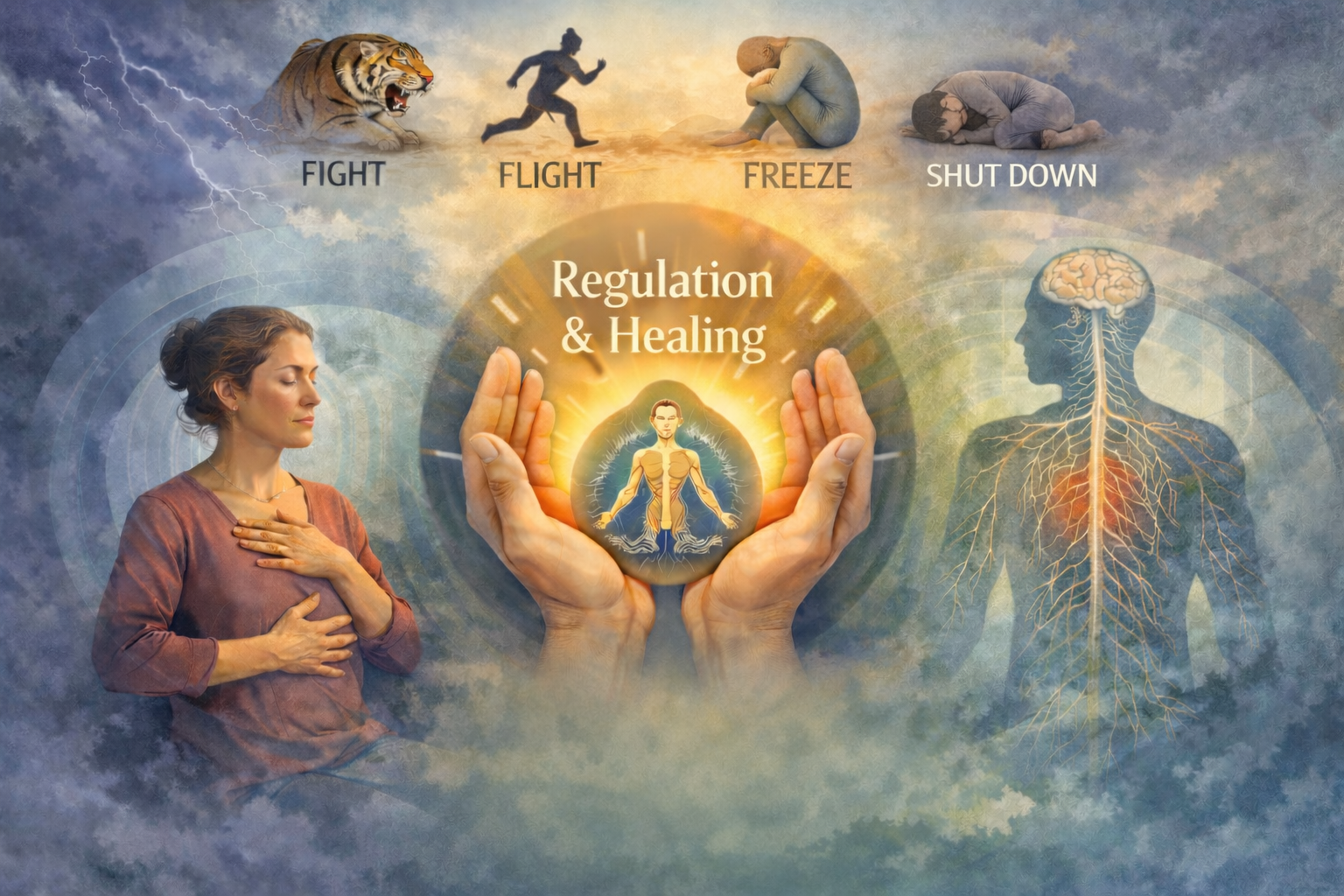
Somatic Experiencing® (SE™) is a body-based psychotherapy approach to resolving the effects of trauma and chronic stress by working with the nervous system. From an SE perspective, trauma is not defined by the event itself, but by how the nervous system responds to and recovers from threat. When this recovery process is incomplete, patterns of fight, flight, or freeze can remain active and continue to shape a person’s emotional, physical, and relational experience.
Developed by Dr Peter A. Levine, Somatic Experiencing is grounded in the understanding that the nervous system has an innate capacity to regulate and return to balance. SE supports this process by helping clients gently track internal sensations and shifts in nervous system activation, allowing the body to renegotiate and complete previously interrupted survival responses.
Work in SE is carefully paced and resourced, using principles such as titration and pendulation to support safety and prevent overwhelm. Rather than revisiting traumatic events in detail, the focus is on building capacity for regulation, increasing tolerance for sensation, and releasing bound survival energy in a way that feels manageable and contained.
Somatic Experiencing is commonly used to support individuals experiencing the impacts of shock trauma, developmental and attachment trauma, nervous system dysregulation, stress-related symptoms and unexplained physical discomfort/chronic pain and/or illness.
By working directly with the body and nervous system, Somatic Experiencing supports greater regulation, resilience, and a renewed sense of safety and connection in daily life.

Emotional Freedom Technique (EFT)
Emotional Freedom Technique (EFT – aka Tapping) is an energy psychology technique that involves tapping on acupressure points while focusing on a particular emotion, stress, unresolved issue or event. Tapping regulates the nervous system by sending a calming signal to the Amygdala, the home of the fight/flight response, while simultaneously verbalising the issue. It is the combination of these two factors that helps the mind understand that there is no physical danger and that it is safe to relax, reducing cortisol levels and bringing balance back into the nervous system.
EFT is also a very practical self-help tool, so after it has been taught, it can be used over and over again to regulate your nervous system, reduce stress and bring the body back into balance.

IFS Informed/Ego State/Parts Work
Parts work, is a structured, evidence-informed therapeutic approach that understands the mind as made up of distinct “parts,” rather than a single, uniform personality. These parts naturally develop across the lifespan in response to relationships, stress, and adversity. Some parts take on protective roles—such as managing emotions, staying in control, avoiding pain, or keeping us functioning—while other parts may hold emotional wounds from earlier experiences, such as fear, shame, grief, or unmet attachment needs. In parts work, all parts are viewed as meaningful and adaptive, even when their patterns feel distressing or problematic.
Therapy focuses on helping clients access a calm, grounded inner state and learn to notice and relate to their parts with understanding rather than judgment or force. As trust and internal safety increase, protective parts no longer need to work as hard, and wounded parts can be gently supported to release burdens from the past. Over time, this process can lead to improved emotional regulation, reduced inner conflict, greater self-understanding, and a stronger sense of choice and internal cohesion. Parts work is especially well suited and used within trauma therapy, as it proceeds at a pace guided by the nervous system and prioritises safety, consent, and collaboration throughout the therapeutic process.

“Trauma is not what happens to you; it is what happens inside you as a result of what happens to you.” Gabor Mate
Office info

In-person Sessions
Providing you with a safe space to relax
All face-to-face appointments will take place in our calm office environment with fully private rooms, conveniently located within At Ease Psychology at Daisy Hill, Brisbane. Face to Face appointments are available Monday, Thursday & Friday.
Online Sessions
Telehealth video link sessions are also available for your convenience. Online sessions provide the same level of support and confidentiality as face-to-face appointments, with flexibility for those who find regular appointments difficult to attend. Telehealth appointments are available Monday, Tuesday, Thursday & Friday.
Fees
Sessions are 60 mins and are $160
90-minute sessions are available during the processing phase of treatment; these sessions are $250.
Please note that these services are not rebated by Medicare.
Benefits include - no need for a mental health care plan, no diagnosis recorded on your permanent health record, increased flexibility of therapeutic modalities, so we find what works for you, fees are inline or less than typical gap fees, no wait lists, and appointments are available now.
NDIS - As per the schedule of fees
WorkCover - As per the schedule of fees
Health Fund Rebates
BUPA - Provider No J001773
ARHG - Provider No PC28774T this includes St Lukes Health, Police Health, GMHBA, Westfund, Emergency Services Health, See-u by HBF (prev CUA), Phoenix Health, HBF, AIA Health, Mildura Health, Teachers Union Health, Teachers Health, Nurses & Midwives Health, Unihealth, Doctors Health Fund.
Australian Defence Force Family Program - Provider No PC28774T
Medibank Private - Provider No A312631F
AHM - Provider No 21260636
HCF - Provider No - C0001156
WorkCover
Approved Counsellor/EMDR Therapist - If you have or are making a claim under WorkCover for a single-incident trauma and require trauma therapy, please get in touch for possible priority appointments.
Hours
Monday 12pm – 6pm (Daisy Hill)
Tuesday 9am - 7pm (Online only)
Wednesday (Online only, pls call)
Thursday 8am – 6pm (Daisy Hill)
Friday 8am – 5pm (Daisy Hill)

Charmaine Dunn Counselling welcomes NDIS participants by providing therapeutic support to plan-managed and self-managed individuals. Charmaine will work with you to overcome barriers that are preventing you from achieving your goals. Counselling can assist you to enhance daily living, increase well-being, improve mental health, increase community involvement and build interpersonal skills.